
Table of Contents
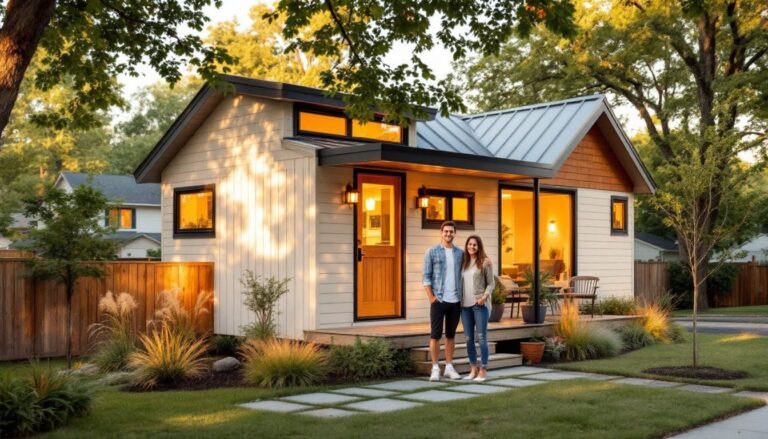
ToggleMarcel Lebrun has become synonymous with reimagining how people live in compact spaces. His approach to tiny home design blends practical engineering with aesthetic sensibility, proving that downsizing doesn’t mean sacrificing comfort or style. In 2026, as housing costs continue climbing and environmental awareness deepens, Lebrun’s philosophy resonates with homeowners, DIY enthusiasts, and those seeking a more intentional way of living. This guide explores the principles behind Marcel Lebrun tiny homes, how his design concepts work in real life, and how you can apply them to your own minimalist living project.
Key Takeaways
- Marcel Lebrun tiny homes prioritize intentional layout, material honesty, and adaptability to prove that downsizing doesn’t sacrifice comfort or style.
- Vertical thinking and precision storage integration—such as floor-to-ceiling cabinetry, multi-functional furniture, and built-in solutions—maximize usable space without feeling cramped.
- Sustainable building practices like local sourcing, strategic window placement, and energy-efficient design reduce environmental impact while lowering long-term utility costs.
- Before building, define your daily activities and non-negotiables, then create a detailed floor plan with precise measurements to avoid costly oversights.
- Tiny home living delivers real financial freedom over 20 years through lower maintenance, reduced utilities, and decreased property taxes, making it a practical long-term investment.
- The tiny home movement combines economic, environmental, and personal benefits, making it a deliberate choice that resonates with homeowners seeking intentional living in 2026 and beyond.
Who Is Marcel Lebrun and Why His Tiny Homes Matter
Marcel Lebrun isn’t just another designer cashing in on the tiny home trend. He’s a builder and designer whose work emphasizes functionality over flash, treating every square inch like valuable real estate that must earn its keep. His tiny homes often feature on-site builds or mobile designs that push past the limitations most people assume are baked into compact living.
What sets Lebrun apart is his willingness to address real pain points. Rather than stacking aesthetic ideas on top of impractical layouts, he starts with how people actually live, cooking, sleeping, working, storing their stuff, then designs backward. Apartment Therapy covers small space living ideas that echo similar philosophies: every element should serve a purpose. His influence has grown because he proves tiny homes can be both humble and refined. Whether someone’s drawn to the lifestyle for financial reasons, environmental concerns, or pure minimalist appeal, Lebrun’s work demonstrates it’s achievable without feeling cramped or compromised.
Key Design Principles Behind Lebrun’s Tiny Home Philosophy
Lebrun’s design ethos rests on three core pillars: intentional layout, material honesty, and adaptability. Intentional layout means nothing is placed by accident: corridors are minimized, sightlines flow, and zones blend without hard walls. Material honesty translates to using wood, metal, and concrete in ways that celebrate what they are rather than disguising them. A steel beam isn’t hidden behind drywall, it’s exposed and finished beautifully. Adaptability ensures the home evolves as the owner’s needs shift.
These principles stand in contrast to typical contractor-grade construction, where a tight space is treated like a penalty box. Dwell’s article on Marcel Lebrun’s Tiny House on Wheels showcases how his smart storage and multi-use elements maximize utility. Consider a kitchen island that’s also a work desk, or a bed platform under which tools, off-season clothes, or guest bedding tucks away. These aren’t gimmicks: they’re solutions born from honest problem-solving.
Space-Maximizing Layouts and Smart Storage Solutions
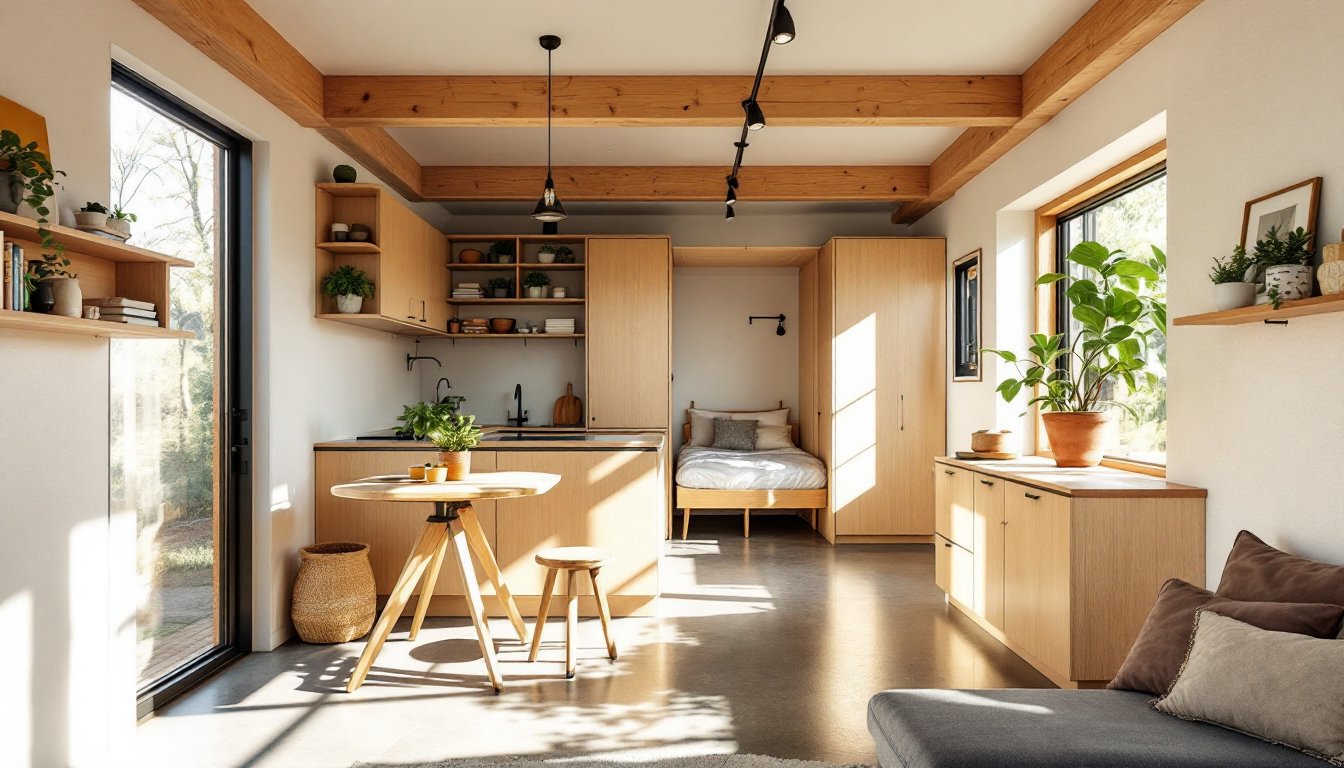
Vertical thinking is non-negotiable in tiny home design. Lebrun uses floor-to-ceiling cabinetry, wall-mounted shelving, and recessed shelving to eliminate wasted volume. The key difference between a cramped tiny home and a spacious one often isn’t square footage, it’s how storage is integrated.
Drawers under stairs, hollow bed frames, and built-in benches with lift-up seating aren’t novel ideas, but Lebrun executes them with precision. Standard lumber sizing (2×4 studs are actually 1.5″ × 3.5″, and 2×8 joists run 1.5″ × 7.5″) allows him to plan exact cabinet depths and shelf spacing that don’t waste fractions of an inch. Shelving rarely exceeds 12″ depth in sleeping or office areas, because shallow shelves hold what matters, books, plants, personal items, without eating living space.
Multi-functional furniture is essential, but it must not look like compromise. A dining table on lockable wheels, a murphy bed with a locking mechanism that’s smooth enough for daily use, or a seating bench that doubles as storage, these work only if the execution is refined. Poor joinery, wobbly mechanisms, or misaligned drawer glides turn multi-function furniture into an annoyance. Lebrun’s designs emphasize quality hardware, precise construction tolerances, and finishes that age well.
Sustainable and Eco-Friendly Building Practices
Sustainability isn’t merely aesthetic in Lebrun’s work, it’s structural. He prioritizes locally sourced materials where possible, reducing transportation emissions and building relationships with regional suppliers. Reclaimed or recycle-content building materials aren’t used for their rustic charm: they’re chosen because they’re durable, available, and lower-impact than virgin materials.
Energy efficiency is non-negotiable. A tiny home by definition uses less conditioned space, but insulation, air sealing, and window placement still matter enormously. Lebrun designs homes with overhangs sized to block summer sun yet allow winter light, reducing mechanical heating and cooling load. Where traditional homes might install 6-ton air conditioners, a well-designed tiny home needs perhaps a 1-ton window unit, or none in mild climates.
Solar integration and composting toilets aren’t trendy additions: they’re practical tools that extend the home’s self-sufficiency. Homify showcases global home design inspiration that includes sustainable building practices worldwide, reflecting how this philosophy scales across climates and budgets. The IRC (International Residential Code) governs ventilation, insulation, and structural standards, though codes vary by jurisdiction. Lebrun’s designs respect these baselines while seeking elegant solutions that exceed minimum standards.
How to Apply Lebrun’s Concepts to Your Own Tiny Home Project
Before reaching for a saw or ordering framing lumber, nail down your non-negotiables. What do you actually do at home? If you cook seriously, your kitchen layout becomes the project’s anchor point. If you work remotely, your office zone needs acoustic treatment and natural light. Write this down, not as vague aspirations, but as time-of-day activities. This drives layout decisions far more effectively than looking at magazine photos.
Start with a detailed floor plan. Use graph paper at 1/4″ scale, or sketch digitally, it doesn’t matter, but precision does. Mark electrical outlets, windows, doors, and structural elements. Then overlay your daily zones: sleep, work, cook, relax, exercise, entertain. Overlapping zones (like a dining table that’s also a desk) can reduce total footprint, but overlapping too much creates chaos.
Measure everything twice, then measure again. Nominal vs. actual dimensions matter, a “2×4″ wall framing stud is actually 1.5″ × 3.5″, which affects cabinet sizing, window rough openings, and final finishes. Account for wall thickness (typically 4.5″ for a 2×4 exterior wall with insulation and finish) when planning interior dimensions. Many DIY projects stumble not because of ambition but because 1/2″ oversights cascade into 6” problems.
For tiny house real estate or personal builds, consider whether your space is permanent or mobile. Mobile tiny homes require different structural considerations, lighter wood, reinforced floor joists, and careful weight distribution. Permanent foundations (concrete, piers, or a trailer frame) simplify some choices but lock you into a location.
Do the math on materials before breaking ground. Paint coverage runs roughly 350–400 square feet per gallon: flooring, insulation, and framing lumber all have standard measurements and waste factors. Underestimate by 10%, not 30%. Request quotes from at least two suppliers and cross-check pricing, regional variations and market shifts affect costs, so “typical” is a starting point, not a guarantee.
Budget for proper tiny house plans or professional plan review. Many jurisdictions require permitted construction, especially if you’re building on owner-occupied land. Check with your local building department early. Permit delays are painful, but building without one is worse. If structural work, electrical, or plumbing is involved, don’t DIY beyond your competency, hiring a licensed electrician or plumber for roughing-in saves costly rework.
Tiny Home Living: Practical Benefits for Homeowners
Financial freedom is real but often overstated. A tiny home can cost $80,000–$150,000+ depending on finishes and location, not pocket change. But over 20 years, combined utility savings, lower property taxes, and reduced maintenance can free up cash. But, don’t expect a tiny home to be a “cheap” home: craftsmanship and sustainable materials cost something.
Maintenance burden shrinks dramatically. A 400-square-foot home requires roughly one-tenth the exterior painting, roof work, and foundation monitoring of a 4,000-square-foot house. HVAC systems are simpler and cheaper to service. When something does break, the repair radius is tighter, replacing all plumbing or rewiring is less disruptive in smaller quarters.
Climate resilience improves. Tiny home YouTube channels often feature owners discussing how easier it is to heat, cool, and defend a small space during extreme weather. Smaller windows reduce heating loss: interior walls provide shelter zones: a small water tank can be filled from alternative sources during interruptions. None of this is magical, but the margin of error shrinks, meaning intentional design pays off.
Psychological benefits are harder to quantify but deeply felt. Reducing clutter and excess often reduces decision fatigue. Ownership of fewer possessions simplifies life in ways that sound cliché until you live it. The community around tiny homes tends to be thoughtful and intentional, not snobbish.
For those exploring tiny homes for singles, the economics shift further. A single person generating perhaps 40% of the square footage demand of a couple means even more efficiency. Also, shipping container tiny homes and tiny house ADU options open alternatives beyond stick-frame construction.
Conclusion
Marcel Lebrun’s approach to tiny homes proves that living small doesn’t mean living poorly. By combining intentional layout, material honesty, sustainable building, and smart storage, his designs show that constraint sparks creativity rather than limiting it. Whether you’re building from scratch, renovating a small space, or simply curious about minimalist living, the principles behind his work, measuring carefully, designing for your actual life, and respecting the materials you use, apply universally. The tiny home movement isn’t a passing fad: it’s a deliberate choice that makes sense economically, environmentally, and personally for more people each year.