
Table of Contents
TogglePicking a new sofa is one of those decisions that shouldn’t be rushed, you’re living with it every day for years. If your space is awkwardly shaped, your lifestyle constantly shifts, or you simply hate the idea of being locked into one fixed layout, the choice between a traditional sectional and a modular sofa matters more than you might think. Both styles promise comfort and style, but modular sofas offer something traditional sectionals often don’t: the ability to reconfigure them as your needs evolve. Whether you’re furnishing a growing family home, a rental you might leave, or just someone who likes options, understanding what separates these two sofa types will help you make a smart investment that actually fits your life.
Key Takeaways
- Modular sofas offer reconfigurable flexibility with independent units that connect via clips or brackets, letting you rearrange, expand, or move pieces to different rooms as your lifestyle evolves.
- A sectional sofa modular design allows you to customize fabric per piece, upgrade individual sections, and replace worn cushions without replacing the entire sofa, saving money and reducing waste over time.
- Measure your space, doorways, and module dimensions carefully before purchasing—test arrangements with paper cutouts to ensure the modular sofa configuration fits your traffic flow and lifestyle needs.
- Mid-range modular sofas ($800–$2,000) with medium-density foam and hardwood frames offer the best value for families, while premium lines ($2,000+) with high-density foam and eight-way springs provide superior longevity.
- Modular sofas perform best with weekly vacuuming in seams, regular connector checks every 6–12 months, and professional deep cleaning every 18–24 months to maintain durability and appearance.
What Makes Modular Sectionals the Smart Choice for Modern Homeowners
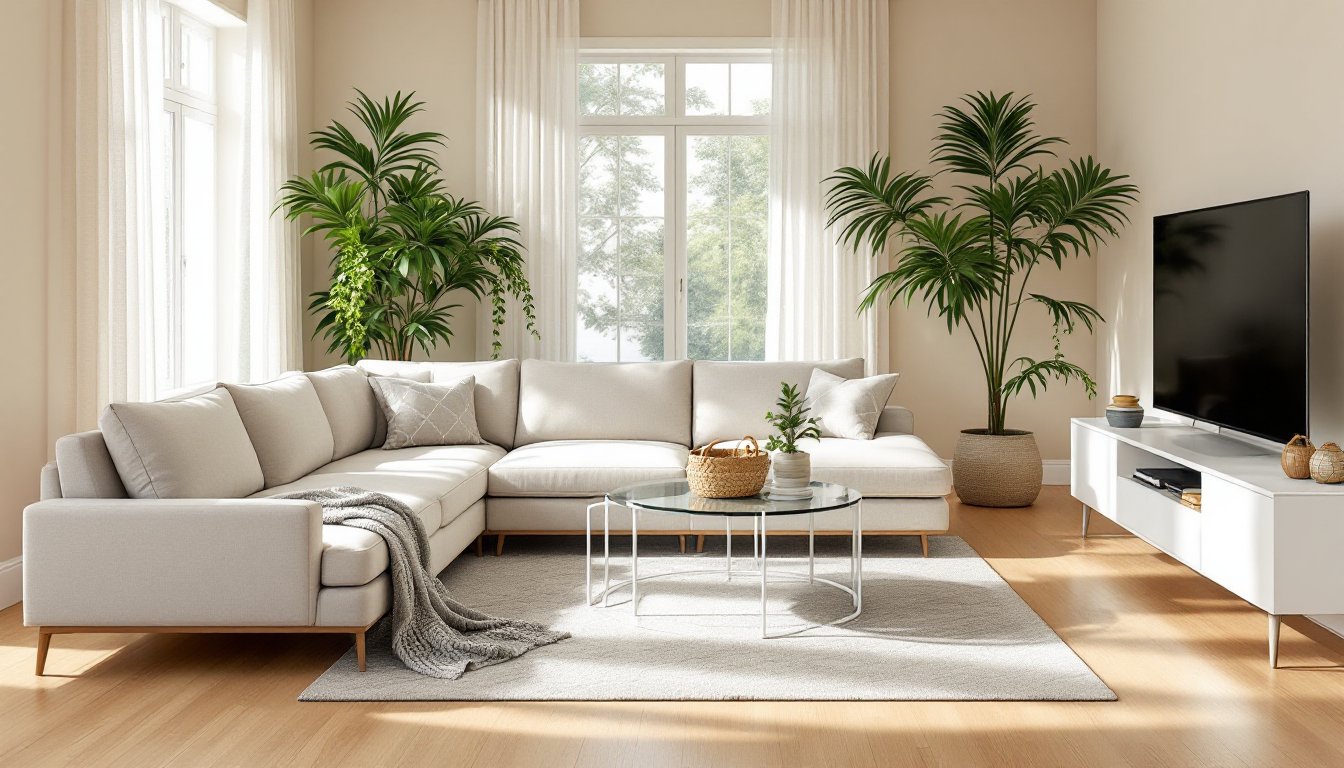
Modular sofas are built as independent units that connect together using clips, connectors, or simply by sitting side by side, you can rearrange, swap, or expand them without tools or permanent fixes. A traditional sectional, by contrast, is one unified frame: the pieces bolt or glue together at the factory and stay that way.
For homeowners, this flexibility matters. A modular sofa lets you reconfigure around a new TV placement, separate pieces for a larger gathering space, or even move individual sections to different rooms as life happens. If you rent, you’re not hauling a massive permanent sectional out the door.
Understanding the Layout Flexibility and Customization Options
When you buy a modular sofa, you’re really buying a system. Most brands offer individual units, armless middles, left-arm pieces, right-arm pieces, corner modules, ottomans, and sometimes chaise lounges. You can design your layout from scratch or start with a set and add pieces later. This means you’re not stuck with whatever the manufacturer decided was “the standard L-shape” or corner configuration.
Customization goes beyond layout too. Many modular sofas let you choose fabric per piece, so you can mix a durable performance fabric on high-traffic seats with a softer option on the chaise. You can also upgrade just one section if it wears faster, rather than replacing the whole sofa. That’s real durability thinking.
Key Differences Between Traditional Sectionals and Modular Designs
A traditional sectional is engineered as a single unit. The frame, springs, and upholstery form one continuous structure from end to end. If you have an L-shaped sectional, both arms and the corner are fixed. Strength comes from that unified construction, no seams in the middle of the seating surface, and you won’t feel movement between connected pieces.
Modular sofas connect individual frames using brackets, magnets, or Velcro-style fasteners. Each piece sits independently, so you might feel a tiny shift if someone sits down hard or leans against the connection point, not dealbreaker territory, but worth knowing. The trade-off is reconfigurability: that same design lets you pull the sofa apart in minutes and rearrange it but you want.
Durability and weight handling work differently too. A traditional sectional’s unified frame can handle heavier loads spread across its entire depth. Modular designs distribute weight across separate frames, which is plenty sturdy for normal use but might sag faster if one section bears way more weight than its neighbors over years of uneven sitting. High-quality modular sofas, especially those with eight-way hand-tied springs or high-density foam, sidestep this, but it’s something to verify in the specs.
Aesthetically, traditional sectionals often have a seamless, polished look that some people prefer. Modular sofas show their seams and connectors, which fits modern or industrial decor but won’t vanish into a traditional living room design.
How to Measure Your Space and Choose the Right Configuration
Before you fall in love with a sofa, measure ruthlessly. Grab a tape measure and note the length, width, and depth of the space where the sofa will sit. Then measure your doorways, hallway width, and stairwell dimensions if you’re not on the ground floor, you need to confirm the sofa (or its individual modules if modular) can actually get into your home.
For modular sofas, measure the width and depth of each module separately. Most modular pieces are roughly 35–40 inches deep, 30–40 inches wide per seat, and 16–18 inches tall at the seat cushion. An armless middle is typically 30 inches wide: a corner or chaise adds width or extends seating depth. Sketch your room to scale and test arrangements with paper cutouts of your sofa pieces, it takes five minutes and prevents regret.
Consider traffic flow too. You need clear paths to the sofa and past it: leaving just 18 inches between the sofa edge and a coffee table or TV stand will feel cramped. Apartment Therapy and similar design sites often suggest 24–30 inches as the functional sweet spot for walkways.
Think about your actual lifestyle. Will you host large gatherings often? A modular setup with extra pieces adapts better. Do you have pets or kids that might trash one section? Modular lets you replace just that piece. Are you in a rental? Modular again wins, it packs up and moves without headache.
Budget-Friendly Buying Tips and What to Expect at Different Price Points
Sectional and modular sofa prices span a wild range. Budget options (under $800) often use sintered or low-density foam and basic webbing frames, they’re fine for light use or temporary setups but tend to sag within 3–5 years. Mid-range modular sofas ($800–$2,000) usually feature medium-density foam (1.8–2.0 lbs/cubic foot), hardwood frames, and some fabric options. Premium modular lines ($2,000+) jump to high-density foam (2.5+ lbs/cubic foot), eight-way hand-tied springs, kiln-dried hardwood, and performance fabrics that resist staining.
For modular specifically, buying the base set and adding pieces later can help spread costs. A 3-piece modular (say, left arm, middle, right arm) might run $1,200: adding a chaise or ottoman later is another $300–$500. Compare that to a traditional sectional in the same price range, which you can’t expand without buying a second sofa.
Fabric choice impacts price and durability heavily. Natural fabrics (linen, cotton) feel luxe but stain easily and need dry cleaning. Performance fabrics (polyester microfiber, branded solutions like Crypton or Sunbrella) resist spills and pet damage, you can blot and rinse. Homedit reviews often highlight how fabric type affects real-world durability, especially for families with kids or pets.
Don’t skip white-glove delivery and setup if the site offers it. A $150 delivery fee that includes assembly and debris removal is worth the peace of mind, especially with modular sofas that need initial connector checks.
Maintenance, Care, and Long-Term Durability for Your Investment
Caring for a modular sofa starts with knowing your fabric. Performance fabrics need vacuuming weekly with an upholstery attachment to keep dust and debris out of seams, that’s where dirt hides in modular designs because of the seams between pieces. Spot-clean spills immediately with a damp cloth: use a fabric brush for set-in stains.
For traditional sectionals, vacuuming is the same, but the unified frame means fewer seam traps. Both styles benefit from flipping or rotating cushions every month if removable, or at least rotating the sofa itself (front to back) every few months so one section doesn’t bear all the weight.
Connectors on modular sofas need occasional attention. Check them every 6–12 months to ensure they’re tight and the pieces still align properly. Wear and shifting over time can loosen connectors: tightening them is a two-minute job that keeps the sofa feeling solid.
For longevity, buy slipcovers or throws that protect high-traffic zones. Young House Love famously covers furniture with washable slipcovers, it extends the life of upholstery and lets you refresh your space with minimal cost. Deep cleaning by a professional upholstery service every 18–24 months also keeps both sectional and modular sofas looking newer longer.
Modular sofas have a secret durability advantage: you can replace worn cushions or reupholster individual pieces instead of the entire sofa. For a traditional sectional, reupholstery is an all-or-nothing job. Over 10 years, that flexibility saves money and waste.
Conclusion
Modular sofas win for flexibility, expandability, and future-proofing your space. Traditional sectionals offer a more unified, polished look and often better weight distribution. Your choice depends on whether you value reconfigurability and adaptability or prefer the simplicity and aesthetics of a fixed design. Measure carefully, understand your fabric options, and invest in a quality frame that will actually last. Either way, you’re looking at a piece you’ll use every single day, take the time to choose wisely.