
Table of Contents
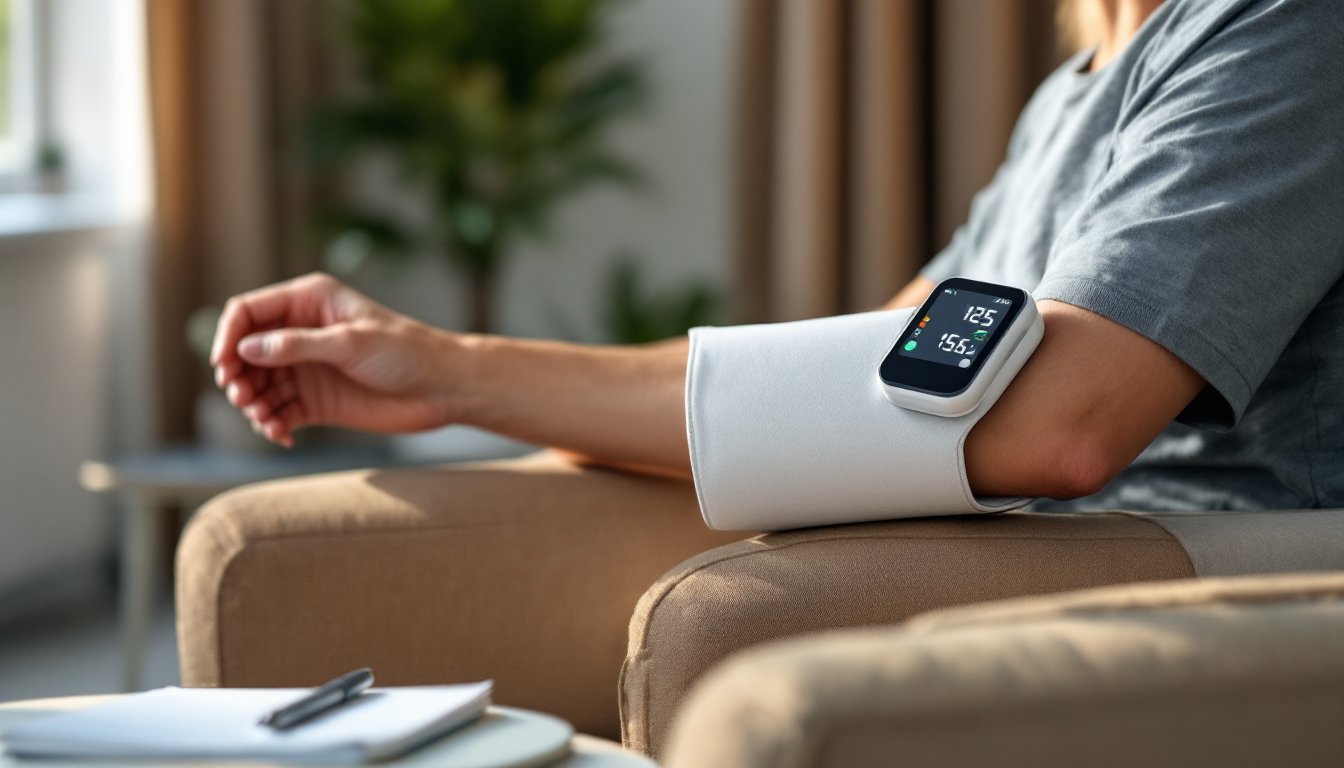
ToggleIf you’ve been tasked with monitoring blood pressure at home, whether for yourself, a family member, or as part of ongoing health management, an upper arm blood pressure monitor is the most reliable choice available today. Unlike wrist or finger monitors, upper arm models measure pressure closer to the heart, delivering accuracy that healthcare providers trust and recommend. The right monitor sits on your shelf, ready to give you consistent, actionable readings without fuss. This guide walks you through what makes an upper arm monitor worth the investment, how to use it correctly, and what to watch out for when things don’t add up.
Key Takeaways
- Upper arm blood pressure monitors are the gold standard for home monitoring because they measure pressure closest to the heart, delivering accuracy that healthcare providers trust and medical organizations consistently recommend.
- Choose a validated upper arm monitor certified by AAMI, ESH, or BHS to ensure accuracy within ±5 mmHg, and verify the cuff fits properly—ill-fitting cuffs are a leading source of false readings.
- Proper technique is crucial: sit quietly for 5 minutes beforehand, position the cuff at heart level with arm support, avoid talking during measurement, and take readings twice with at least one minute between attempts.
- Regular maintenance and troubleshooting—such as checking cuff integrity, keeping fresh batteries on hand, and comparing home readings to office measurements every six months—keeps your monitor accurate for years.
- Modern upper arm monitors with Bluetooth connectivity and data storage offer real value if you’re managing a chronic condition and want to share trends with your doctor or track changes over time.
- Inconsistent readings usually stem from user error rather than device failure, so always review your positioning, arm support, and preparation habits before suspecting the monitor itself.
Why Upper Arm Monitors Are the Gold Standard for Home Use
Upper arm blood pressure monitors have earned their spot as the preferred home health tool for one straightforward reason: they measure pressure at the point closest to the heart. When the cuff wraps around your upper arm, right at the level of your heart, the sensor captures a reading that closely matches what you’d get in a doctor’s office. This is the fundamental advantage.
Wrist and finger monitors sound convenient, but they’re notoriously finicky. Position them even slightly wrong, and your reading climbs or drops by 10 to 20 millimeters of mercury (mmHg), enough to misguide treatment decisions. Finger monitors are the worst offenders: they’re mostly novelty items. Upper arm cuffs, by contrast, are standardized and validated across thousands of clinical studies.
Major medical organizations, the American Heart Association, the American College of Cardiology, and cardiologists themselves, consistently recommend upper arm monitors for home monitoring. If you’re tracking hypertension, adjusting medications, or managing any cardiovascular condition, your doctor likely expects you to use an upper arm device. This isn’t marketing: it’s evidence-based practice. The investment in a quality upper arm monitor pays dividends in accuracy and peace of mind.
Key Features to Look For When Choosing an Upper Arm Monitor
Not all upper arm monitors are created equal. The best models share a few critical traits that separate reliable tools from money-wasting gadgets.
Accuracy and Validation
Before you buy, check whether the monitor has been validated against clinical standards. Look for certification from the Association for the Advancement of Medical Instrumentation (AAMI), the European Society of Hypertension (ESH), or the British Hypertension Society (BHS). These organizations test monitors to ensure they meet accuracy benchmarks, typically within ±5 mmHg of a mercury sphygmomanometer. If the manufacturer doesn’t list validation, be skeptical.
Accuracy also depends on the cuff size. A universal cuff (roughly 8.6 to 16.5 inches) works for most adults, but if you have a particularly small or large arm circumference, confirm the cuff fits properly. An ill-fitting cuff is one of the leading sources of false readings. Some monitors come with multiple cuff sizes: these are worth the extra cost if fit is a concern.
Memory and data tracking matter too. A monitor that stores at least 60 readings, with date and time stamps, lets you and your doctor spot trends. Better yet, according to comprehensive reviews of the best blood pressure monitors, many now flag irregular heartbeats (arrhythmias) detected during measurement, which can be an early warning sign.
Connectivity and Smart Features
Modern upper arm monitors increasingly connect to your smartphone via Bluetooth, syncing readings to a health app or cloud storage. This sounds nice, but ask yourself: do you actually need it? If you’re just checking your pressure once or twice daily and recording it in a notebook, the extra cost for connectivity might not justify itself.
But, if you’re managing a chronic condition and want to share data instantly with your doctor or track trends over months, Bluetooth capability is genuinely useful. Look for monitors that integrate with popular platforms, Apple Health, Google Fit, or dedicated cardiac apps. Some insurers and employers now reward consistent tracking with premium discounts, so check whether your monitor works with your health ecosystem.
Wi-Fi models are another tier. These sync automatically whenever they’re in range of your home network, removing the manual Bluetooth pairing step. They’re convenient if you’re less tech-savvy, but they cost more. Battery life is also worth reviewing: models powered by four AA batteries outlast rechargeable options during travel, and you can swap fresh batteries in seconds.
How to Use Your Upper Arm Monitor Correctly for Accurate Readings
The monitor is only as good as your technique. Incorrect positioning or rushing through the process can undermine even the most validated device.
Start with preparation: sit quietly for five minutes before measuring. Don’t measure immediately after caffeine, exercise, or stress, wait at least 30 minutes. Bladder fullness also raises readings, so use the restroom first. Measure at roughly the same time each day (morning and evening are typical) so your doctor can compare apples to apples.
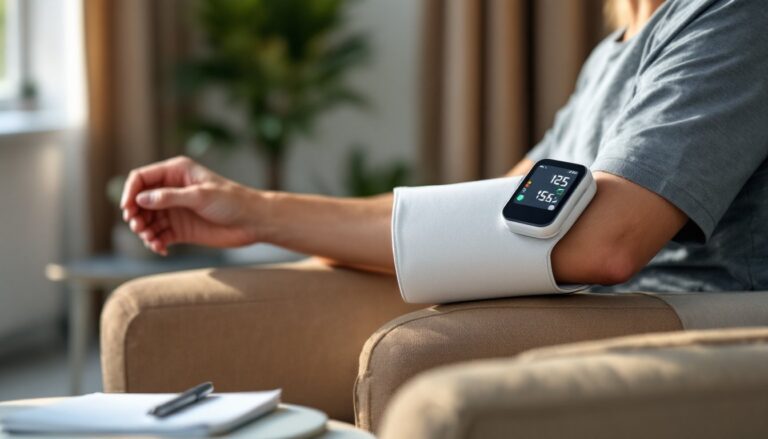
When you’re ready, sit upright with your back supported. Your feet should be flat on the floor, not dangling or crossed. Extend your arm so the cuff is at the level of your heart, not your wrist or shoulder. If the armrest is too high or too low, use a pillow to adjust your arm height. Arm support matters: holding your arm up without support tenses muscles and artificially elevates pressure.
Slip the cuff on over bare skin or a thin sleeve. A thick sweater bunched under the cuff throws off the reading. The cuff should fit snugly, you should be able to slide one finger underneath, no more. Too loose, and the reading is high. Too tight, and it’s uncomfortable without improving accuracy.
Press start and remain still and quiet while the monitor inflates and deflates. Don’t talk. Don’t tense your arm. Many people spike their numbers by gripping the armrest or holding their breath. Some monitors display a visual cue (a smiley face or green light) if you’re sitting still enough, watch for that feedback.
Take readings twice, with at least one minute between attempts, and average them. If the two readings differ by more than 10 mmHg, take a third reading and average all three. This buffer accounts for normal moment-to-moment variation. Record all results, your doctor wants to see the pattern, not just the lowest number.
Troubleshooting Common Issues and Maintenance Tips
Even a quality monitor stumbles sometimes. Knowing how to diagnose and prevent common problems keeps your device working accurately for years.
Inconsistent or erratic readings often stem from user error before device failure. Re-read the technique section above, nine times out of ten, the issue is cuff position, arm support, or talking during measurement. If you’ve ruled out technique, check the cuff for damage. A small leak or separation at a seam silences accuracy. Cuffs wear out over time (typically 2-5 years of daily use): replacement cuffs are usually $30–$60 and are worth the investment rather than buying a new monitor.
Battery or power issues are next. Keep fresh batteries on hand, especially if you travel. Rechargeable monitors should be charged according to the manual, and batteries degrade after 1-2 years: if your monitor is sluggish at startup, suspect the battery. Some smart monitors lose Bluetooth pairing after a reset: reinstalling the app and re-pairing usually fixes it.
Readings that seem unreasonably high or low warrant a follow-up check at your doctor’s office. Bring your monitor with you and compare it back-to-back with the office device. Systematic differences (your monitor always reads 5-10 mmHg higher than the office) sometimes reveal that your cuff size is off or that you’re white-coat hypertension (stress at the doctor raises readings). Single outlier readings, on the other hand, are usually just noise, ignore them and focus on weekly or monthly trends.
For maintenance, store your monitor in a cool, dry place. Don’t leave it in a hot car or humid bathroom: temperature swings and moisture corrode electronics. Wipe the cuff with a damp cloth if it gets sweaty, then air-dry it. Every six months, test accuracy by comparing your home readings to an office device. Smart home product reviews from sources like Tom’s Guide regularly evaluate monitors’ wireless reliability and software stability, so if you’re considering an upgrade, check recent testing for durability and app functionality.
If your readings remain inconsistent even though correct technique and device checks, consult your doctor. Some people have naturally variable blood pressure, and a 24-hour ambulatory monitor (worn for a full day in real conditions) sometimes gives clearer insight than spot checks. Your doctor may also recommend a connected home health device review to compare reliability across models, though always defer to your physician’s guidance on which device suits your health profile.
Conclusion
An upper arm blood pressure monitor is a practical, evidence-backed tool for anyone managing cardiovascular health at home. The key to getting your money’s worth is choosing a validated device, mastering proper technique, and maintaining the equipment over time. Accuracy hinges as much on your habits as on the monitor itself. Invest in a reputable model, learn to use it right, and you’ll have years of reliable data to guide your health decisions and conversations with your doctor.