
Table of Contents
ToggleA small square kitchen table is the unsung hero of compact living spaces. Whether you’re furnishing a tiny apartment, a galley kitchen, or a cozy breakfast nook, a square table maximizes seating without consuming the floor area a rectangular model would demand. In 2024, smart design means fitting your lifestyle into less space, and the right table makes that possible. This guide walks through what to look for when choosing a small square kitchen table: sizing standards, materials that hold up to daily use, and styles that anchor your kitchen without overwhelming it.
Why A Small Square Kitchen Table Is Perfect For Compact Spaces
A square table works geometry in your favor. Unlike a rectangular table, which demands a linear run of floor space, a square footprint lets you tuck a table into a corner, push it against a wall, or center it in an open kitchen without looking cramped.
Small square tables seat two to four people comfortably. A 24″ × 24″ table fits snugly in tight corners and takes up roughly half the floor space of a standard 36″ × 60″ rectangular dining table. A 36″ × 36″ square table accommodates four diners with elbow room and still leaves circulation space in a modest kitchen. The symmetrical shape also simplifies placement, you don’t need to calculate which end faces the wall or where a leaf extension goes.
Square tables also feel more intentional in a small space. They anchor a kitchen zone without the awkwardness of a long, thin rectangle poking into walkways or hallways. And if your kitchen opens into a living area, a square table doesn’t fragment the room into compartments the way a linear table can. Practically speaking, they’re easier to move when you’re rearranging or cleaning behind them. A second pair of hands helps, but a lightweight square table is far simpler to reposition than wrestling a long, heavy rectangular one.
Key Dimensions And Measurements To Know Before Buying
Sizing a kitchen table correctly prevents that “too big” or “too small” buyer’s remorse. The rule of thumb: you need at least 36 inches of clearance on all sides for comfortable traffic flow around a table. If your kitchen or dining nook is smaller, that margin shrinks, but don’t ignore it entirely.
Standard Sizing For Different Room Layouts
A 24″ × 24″ square table seats two people in a pinch and works in studios, one-bedroom apartments, or as a breakfast bar beside a wall. Pair it with benches rather than chairs for flexibility, benches tuck under the table edge and reclaim floor space. This size also works well in a corner kitchen where space is already tight.
A 30″ × 30″ square table is the sweet spot for most small households. It seats two comfortably or four in a pinch (two on each side, or one per side plus one at each end). This size gives you elbow room while staying under 36 inches, so it fits tighter layouts without dominating the room. Expect leg clearance of about 10–12 inches on the underside, standard for comfortable seating.
A 36″ × 36″ square table accommodates four people with real comfort. It’s the largest square option before moving into extended rectangular models. This size works if your kitchen or dining area has decent open space. Standard dining chairs need 18–24 inches of clearance from the table edge to the wall or kitchen island behind them.
Measure your actual space before ordering. Account for door swings, appliance handles, and drawer clearances. Many online retailers provide a floor-space footprint for their models, use it. If you’re shopping in-store, bring a tape measure and walk your kitchen layout mentally with the table in place.
Material Options And Durability Considerations
The material you choose affects longevity, maintenance, and how the table ages in a busy kitchen.
Solid wood (oak, walnut, maple, or pine) is the classic choice. Solid wood tables develop character over time, a scratched maple surface tells a story. They’re repairable: sanding and refinishing bring an old wood table back to life. Expect to pay more upfront, but a quality solid wood table lasts decades. Oak and walnut are durable hardwoods: pine is softer and dents more easily but costs less. Avoid extremely soft woods for high-traffic kitchens.
Engineered wood (plywood or MDF with veneer) is budget-friendly and lightweight. These tables are stable, come in varied finishes, and suit modern aesthetics. The trade-off: they’re harder to repair if the veneer chips, and they won’t outlast solid wood. Still, a well-made engineered table holds up fine in a low-to-moderate-use household.
Metal bases with wood tops are a hybrid approach. Steel or iron frames paired with wood surfaces offer durability and a versatile industrial look. The metal won’t warp, and the wood top is more repairable than a full engineered piece. These are especially popular in farmhouse and contemporary designs.
Glass tops brighten small spaces and feel less visually heavy. They’re easy to clean but show fingerprints and require careful handling. A frosted or tinted glass is less finicky than crystal clear. Pair glass with a sturdy base, aluminum, metal, or solid wood, to prevent wobbling.
Laminate finishes are the most durable against spills and stains. They’re wipeable and stain-resistant, perfect for households with kids or frequent entertaining. They don’t feel as premium as solid wood, and they can’t be refinished if damaged, but they’re practical for heavy-use kitchens.
Consider how you’ll use the table. Fix This Build That offers free plans if you want to build a custom table with material control and cost savings. For a high-traffic family kitchen, laminate or engineered wood with a durable finish makes sense. For a serene guest cottage, solid wood is worth the investment.
Design Styles That Work Best For Small Kitchens
Your table sets the visual tone for the kitchen. In a compact space, the right style makes the room feel intentional, not cramped.
Modern, Rustic, And Traditional Aesthetics
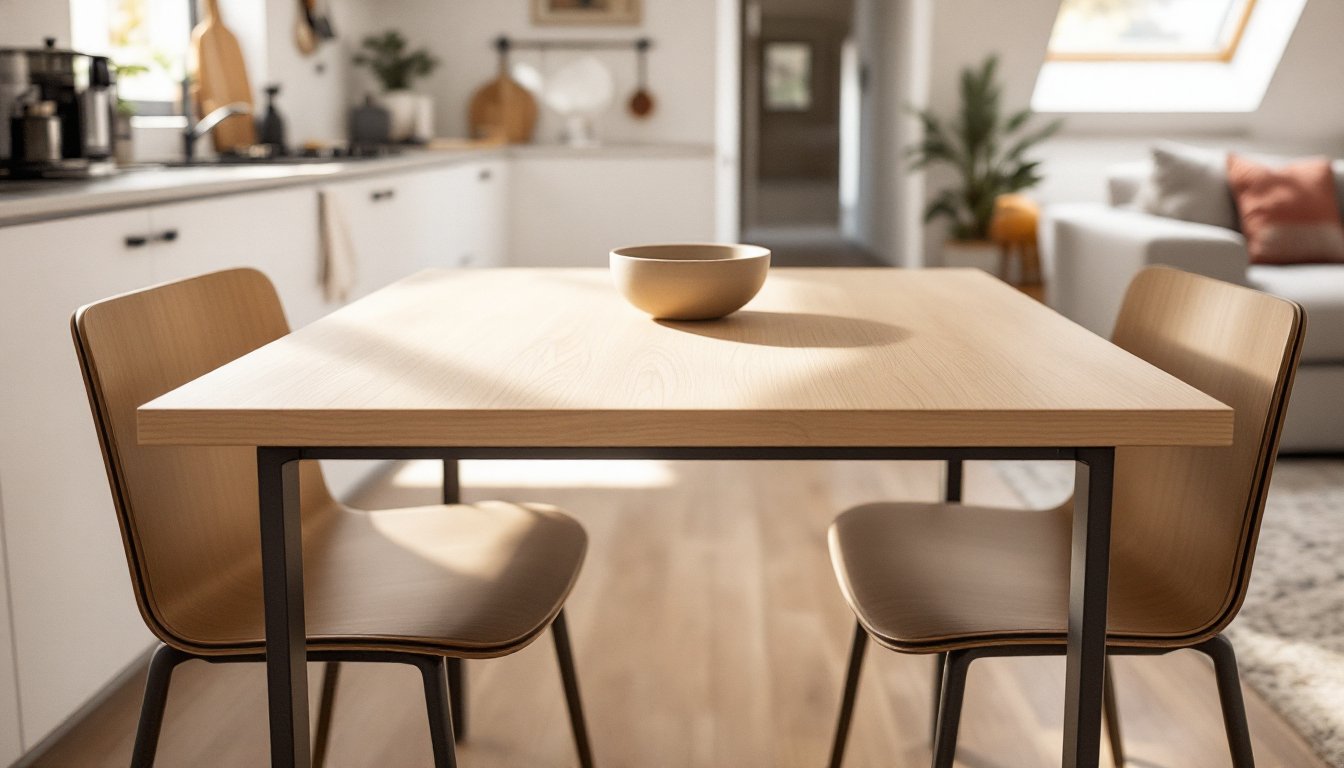
Modern and minimalist tables pair clean lines with simple bases. Think steel legs with a lacquered wood top, or a single pedestal supporting a smooth surface. These designs feel open and don’t visually clutter small spaces. Light finishes (white, natural wood, pale gray) amplify the sense of space. The Kitchn publishes small kitchen solutions that show how modern tables work in tight quarters without sacrificing style.
Rustic and farmhouse styles use heavier wood tops, turned legs, or distressed finishes. In a small kitchen, choose lighter wood (whitewashed oak or pale pine) to keep the style from feeling too heavy. A rustic square table works especially well in open-plan kitchens where it can echo natural materials elsewhere in the home. Farmhouse tables are forgiving, nicks and wear add to the aesthetic.
Traditional and transitional designs use classic proportions with understated ornamentation. Think tapered legs, modest aprons (the frame connecting legs to the tabletop), and neutral stains. These tables don’t date quickly and work in kitchens that blend older and new elements. Ana White provides free DIY furniture plans including several small table designs if you want to build a traditional square table yourself.
Mid-century modern tables, hairpin legs, tapered supports, or molded bases, suit kitchens with vintage or eclectic decor. These designs feel smaller visually, which helps in compact spaces. Pair them with modern or retro chairs for cohesion.
Small spaces benefit from tables that don’t fight for visual attention. Choose a style that echoes elements already in your kitchen, if your cabinetry is simple and modern, a fussy ornate table will clash. If your kitchen has natural wood, a wood table (in a complementary tone) ties the room together. Keep hardware, legs, and finishes simple: busy design details amplify cramped feelings.
Conclusion
A small square kitchen table is an efficient, stylish solution for compact living. Measure your space carefully, choose materials suited to your lifestyle, and select a design that complements your kitchen’s aesthetic. Whether you’re furnishing a studio apartment, a cozy cottage, or a tight galley kitchen, the right square table makes daily dining feel intentional and comfortable, without sacrificing an inch more floor space than necessary.